It seems to me that years ago cash registers had a granite top where you could ring a gold coin to see if it was true or not. Was there ever anything written on this practice?
I doubt it but that also was done with silver coins.
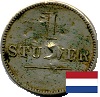
I remember a man selling some coins. I was intrigued to see the coin: which was identified by me thanks to Numista!
The man was unsure as to the quality of silver. The man lifted the coin and placed it on his finger so it balanced and then tapped it with a pen. The buyer looked very happy and said 'I'll take it!" He was pleased with the ring and bought with confidence that it was silver.
This is also one of the few ways to tell apart .800 and .500 Canadian 1967 silver coins. They were minted in both purities in roughly equal volumes after a mid-year debasement, and are usually sold at their average .650 purity.
In Dutch you say "met klinkende munt betalen" (to pay with sounding money), meaning you pay hard cash. In the old days, the saying was probably especially applicable to silver money. Silver is renowned for its sounding qualities.
In the 1980-s, I was in a group of Dutch students in Moscow. Someone accidentally dropped some cash on the tiled floor of a restaurant. Just by the sound, everyone in our group immediately recognized it as 'our' money: falling Soviet roubles didn't sound half as pretty!
Dutch guilders were genuine 'hard currency' in those days, even literally.
Gold and silver alloys are harder than the pure metals but they also "work harden" more than the pure metals. So the ringing of a "stamped" ("coined") coin should ring differently than a cast coin even if the purity is the same.